
Human Exposure to Electromagnetic Fields – Computational Models in Dosimetry
Dragan Poljak, Mario Cvetković
University of Split, FESB
Split, Croatia
This Tutorial is based on the book, D. Poljak, M.Cvetkovic, Human Interaction with Electromagnetic Fields; Computational Models in Dosimetry, Elsevier 2019 and D. Poljak, A. Susnjara, “Deterministic and Stochastic Modeling in Computat. Electromagnetics,” IEEE Press/Wiley, New Jersey, 2024 and on some recent journal/conference papers and recent presenters’ activities in IEEE ICES SC6 Working Groups and IRPA NIR task group.
Tutorial covers twofold aspects of human exposure to electromagnetic fields (EMF); the undesired exposure from artificial EMF sources and the biomedical applications of electromagnetic fields. Tutorial deals with some basic environmental aspects of electromagnetic fields, coupling mechanisms between human body and electromagnetic field, well-established biological effects of electromagnetic fields from static to high-frequency range, international safety guidelines related to limiting exposures to those fields, including relevant exposure limits, electromagnetic-thermal dosimetry models and the related analytical/numerical solution methods of governing equations. Finally, some recent findings arising from the activities carried out within the framework of IEEE ICES working groups, which Tutorial presenters participated (WG2, WG3, WG5 and WG7) and IRPA TG NIR will be reported.
First, theoretical/experimental methods of incident field dosimetry for the assessment of external fields due to low frequency (LF), intermediate frequency (IF) and high frequency (HF) sources are presented including a number of typical examples that cover exposures to power lines, transformer substations, PLC systems, RFID antennas, Wireless Power Transfer (WPT) systems and radio base stations pertaining to 2G/3G/4G and 5G mobile communication systems.
Then, the tutorial presents in detail some efficient electromagnetic-thermal dosimetry methods for the assessment of human exposure to low frequency (LF), intermediate frequency (IF), high frequency (HF) and transient electromagnetic radiation featuring the use of integral/differential equation formulations and related numerical solution techniques (primarily based on the use of Boundary Element Method – BEM, Finite Element method – FEM hybrid BEM/FEM and Moment Method (MoM) approaches) for the evaluation of induced current densities, internal fields, specific absorption rate (SAR), incident power density (IPD), absorbed power density (APD), transmitted power density (TPD) and specific absorption (SA). Also, for HF exposures the related temperature elevation in tissues is of interest. In particular, for GHz frequency range, as far as 5G systems are of interest, a surface temperature increase on the air-body interface is analyzed. Illustrative computational examples pertain to typical realistic exposure scenarios, such as; pregnant woman/foetus exposed to low frequency (LF) fields, the human eye, the brain, the eye and the entire human head exposed to HF radiation.
In particular, for exposure within GHz frequency range, several tissue models, from rather simple to more realistic, will be addressed.
The obtained numerical results for induced current densities, internal fields, SAR, IPD, APD TPD and SA are compared against exposure limits proposed by recently issued ICNIRP 2020 (International Commission on Non Ionizing Radiation Protection).
This is followed by various examples of biomedical applications of electromagnetic fields, including the transcranial magnetic stimulation (TMS), transcranial electrical stimulation (TES), but also some electrotherapy and magnetotherapy techniques. Also, some illustrative computational examples pertaining to thermal modeling of certain ophthalmological procedures will be given.
In the last part of the Tutorial the stochastic modeling of electromagnetic fields is addressed. This part of the Tutorial is mostly based on the book: D. Poljak, A. Susnjara, “Deterministic and Stochastic Modeling in Computat. Electromagnetics,” IEEE Press/Wiley, New Jersey, 2024. Note that the input parameters of models used in bioelectromagnetics suffer from uncertainties in input data set. The values of body tissue parameters such as permittivity and the electrical conductivity vary significantly, depending not only on the age and gender, but also between healthy and ill individuals. Moreover, they are obtained under different measurements on ex vivo animal and human tissues, and exhibit relatively appreciable variations from their average values. When used in computational models, these average values sometimes may result in a rough approximation of realistic scenarios. The models used in bioelectromagnetics are computationally rather demanding as they represent rather complex physical phenomena. Consequently, uncertainty quantification (UQ) based on traditional Monte Carlo method appears to be computationally rather expensive. Therefore, alternative methods such as generalized polynomial chaos and stochastic collocation have become of interest to many researchers in this research area.
In this tutorial, a primer on the application of stochastic collocation (SC) and several illustrative examples are given. Finally, a sensitivity analyis (SA) techniques on the impact of individual input parameters will be presented.
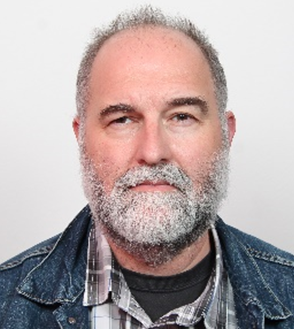
Dragan Poljak received his PhD in el. Eng. in 1996 from the Univ. of Split, Croatia. He is the Full Prof. at Dept. of Electron. and Computing, Univ. of Split. His research interests include computational electromagnetics (electromagnetic compatibility, bioelectromagnetics, ground penetrating radar and plasma physics). To date Prof. Poljak has published more than 160 journ. and 250 conf. papers, and authored some books, e.g. two by Wiley, New Jersey and one by Elsevier, St Louis. He is a Senior member of IEEE, a member of Editorial Board of Eng. Anal. with Boundary Elements, Math. Problems in Eng. And IET Sci. Measur. & Techn. He was awarded by several prizes for his research achievements, such as National Prize for Science (2004), Croatian sect. of IEEE annual Award (2016), Technical Achievement Award of the IEEE EMC Society (2019), George Green Medal from University of Mississippi (2021), IEEE Standards Associations – Certificate of Appreciation, 2022 and National Prize for Science (2023). From May 2013 to June 2021 Prof. Poljak was a member of the board of the Croatian Science Foundation. He was involved in ITER physics EUROfusion collaboration and he is currently involved in IFMIF-DONES EUROfusion collaboration and in Croatian center for excellence in research for tech. sciences. He is active in few Working Groups of IEEE/Internat. Committee on Electromagnetic Safety (ICES) Tech. Comm. 95 SC6 EMF Dosimetry Modeling, (co-chair of WG2 and WG7) and Task Group of Nonionizing Radiation of International Radiation Protection Association (IRPA).
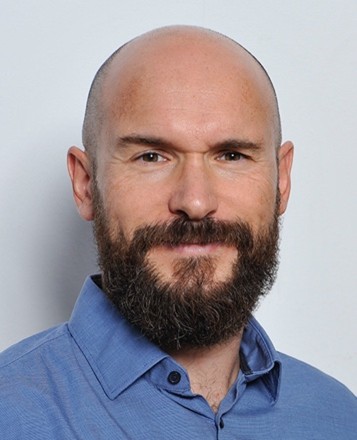
Mario Cvetković received his B.S. degree from the University of Split, Split, Croatia, in 2005, the M.Phil. degree from Wessex Institute of Technology, University of Wales, Cardiff, U.K., in 2009, and the Ph.D. degree from the University of Split in 2013. He is currently Chair for Fundamentals in electrical engineering and an Associate Professor with the Faculty of Electrical Engineering, Mechanical Engineering and Naval Architecture (FESB), University of Split, Croatia. To date, he has co-authored more than 100 papers published in international journals and conference proceedings and several book chapters. In 2019 he coauthored a book entitled “Human Interaction with Electromagnetic Fields – Computational Models in Dosimetry” published by Elsevier. His research interests include numerical modeling with finite elements and method of moments, computational bioelectromagnetics, and heat transfer related phenomena. He held a series of tutorials and seminars related to advanced topics in bioelectromagnetics and various aspects of interaction of humans with electromagnetic fields at: Technical University of Ilmenau, Germany (2010), Malardalen University, Vasteras, Sweden (2014, 2018), Nagoya Institute of Technology, Nagoya, Japan (2017, 2023), University of Maribor, Slovenia (2018, 2019), Hohai University Nanjing, China (2025), several SpliTech conferences (2016, 2017, 2018, 2019, 2020, 2023, 2024, 2025), and SoftCOM conferences (2019, 2021, 2022). He is a Member of the International Committee on Electromagnetic Safety (ICES) Technical Committee 95 and its Subcommittee 6 EMF Dosimetry Modeling where he also served as a Working Group 2 secretary from 2017-2019. He was the recipient of the Best Student Paper Award, awarded at the 16th Edition of the International Conference SoftCOM 2008.
From Tissue Dielectric Properties to Smart Microwave Ablation Applicators: Principles, Methods, and Challenges
Marta Cavagnaro, Sapienza University of Rome, Rome, Italy
Klementina Vidjak, University of Split, FESB, Split, Croatia
Microwave thermal ablation (MTA) is a therapeutic technique used for the in-situ destruction of malignant tissue. This tutorial first introduces the MTA technique and then briefly discusses current state-of-the-art technologies used for treatment guidance, monitoring, and post-procedure outcome assessment, highlighting the open challenges related to real-time feedback and reliable ablation-zone control.
The second part of the tutorial focuses on the main principles and mechanisms that underly the MTA technique. Dielectric properties are discussed first, since they determine the “reaction” of the tissues to the applied electromagnetic field. The behaviour of dielectric properties with the frequency, their changes during MTA heating and the methods used for their measurement are described. Particular emphasis is placed on the open-ended coaxial probe technique, one of the most widely used methods for dielectric characterization at microwave frequencies. The role of dielectric properties in applicator design, numerical modelling, treatment planning, and ablation-zone prediction is discussed, together with the practical limitations of conventional dielectric measurement approaches.
Based on these considerations, the tutorial identifies a key technological gap in current MTA systems: while microwave applicators are primarily designed for energy delivery, they typically provide limited direct information about the evolving tissue state during treatment. Finally, the tutorial presents an emerging solution based on using the MTA applicator itself as a sensing device for in-situ dielectric spectroscopy, including results from ongoing research within the presenters’ research group. This approach has the potential to support real-time monitoring, ablation-zone estimation, and the development of smarter, feedback-controlled microwave ablation systems.
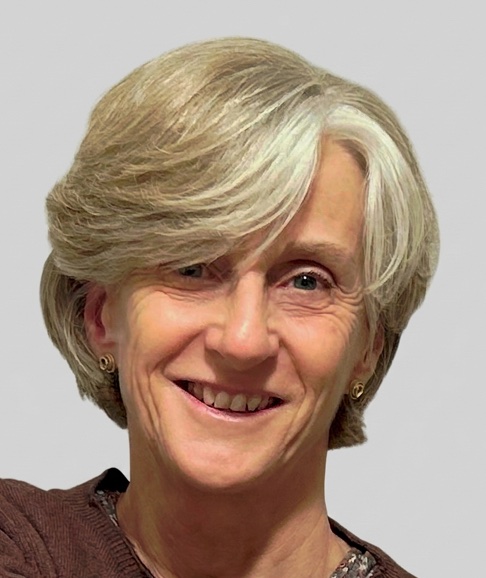
Marta Cavagnaro (M’00, SM’22) received the cum laude Electronic Engineering degree (1993) and the Ph.D. degree (1997) in Electronic Engineering from Sapienza University of Rome, Rome, Italy. She is Associate Professor at the Department of Information Engineering, Electronics and Telecommunications of the same university. Her research interests are related to dosimetric aspects of the interaction between electromagnetic fields and biological systems, as medical applications, measurements of dielectric properties of tissues, and environmental impact of mobile communication systems. She is Associate Editor of the Bioelectromagnetics journal (Wiley), Sensors (MDPI), and serves as anonymous reviewer for several scientific journals. She is a member of the Thermal Medicine Standard Committee of ASME (The American Society of Mechanical Engineers), and a member of the Italian CEI TC106 devoted to standardization issues related to human exposure to electromagnetic fields. She participated in several EU funded COST action related to medical applications of electromagnetic fields (EMFMED, MiMed, MyWAVE). She is vice Chair of the Technical Community on Therapeutic & Diagnostic Systems and Technologies (TC-TDST) of IEEE EMBS. She is author or co-author of more than 200 scientific papers.
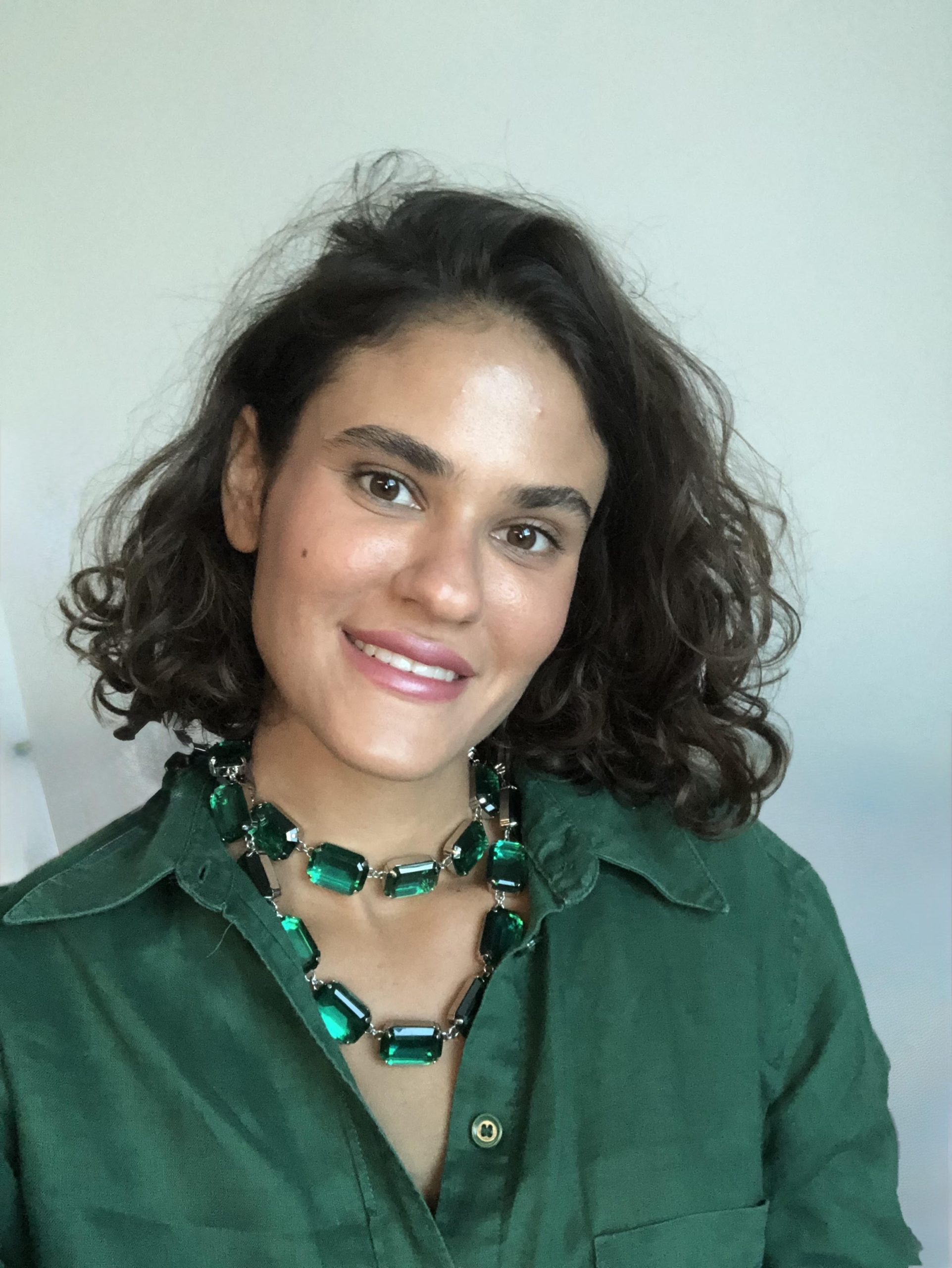
Klementina Vidjak received the summa cum laude Master’s degree in Electronics and Computer Engineering in 2020 from the University of Split, Croatia, and the Ph.D. degree in Information and Communication Technologies from Sapienza University of Rome, Rome, Italy, in 2024, cum laude. She is currently a postdoctoral researcher at the Faculty of Electrical Engineering, Mechanical Engineering and Naval Architecture — FESB, University of Split. Her research interests are related to applied electromagnetics, biomedical applications of electromagnetic fields, dielectric characterization of biological tissues, electromagnetic dosimetry, and microwave-based therapeutic and diagnostic technologies. She serves as an anonymous reviewer for several scientific journals and is an IEEE member.